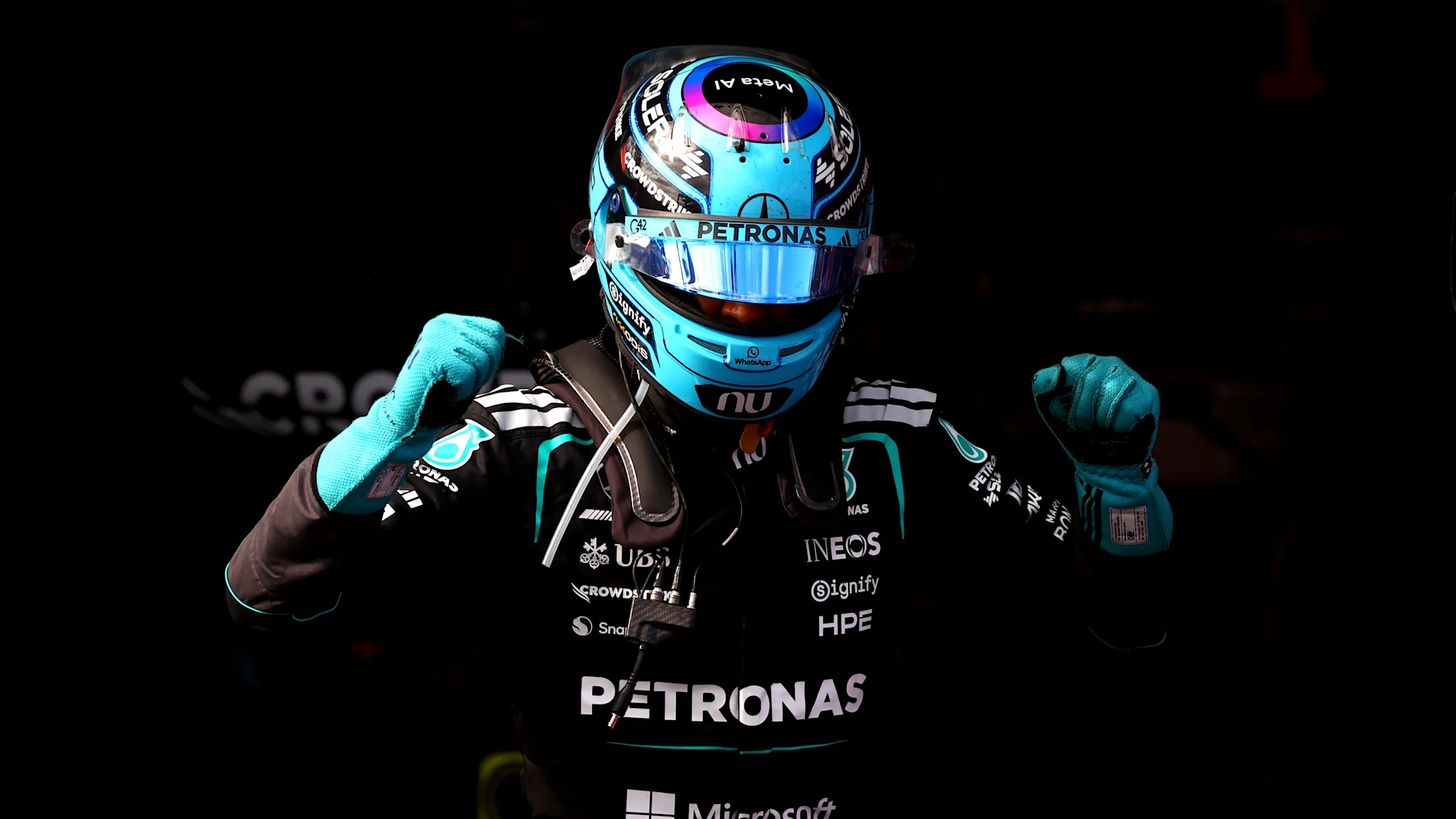
Australian GP Drama: Russell's Win, Ferrari Fight & New F1 Rules Ignite the Season
The roar of engines, the scent of burning rubber, and the electrifying atmosphere of Albert Park converged to deliver a spectacle that set the tone for Formula One’s brave new era. The Australian GP celebration was truly multifaceted this year, capped by a triumphant George Russell, but not before a thrilling tussle with Ferrari and a contentious debut for F1's updated rulebook left fans and drivers alike with plenty to ponder.
As the checkered flag waved over Melbourne, it marked more than just a race finish; it signified the opening salvo in a season promising unprecedented drama. While Mercedes' George Russell ultimately stood atop the podium, his victory was forged in a furnace of strategic battles and high-speed duels, painting a complex picture of F1's future.
Russell's Masterclass: A Mercedes Triumph and Memorable Celebration
George Russell's performance at the Australian Grand Prix was nothing short of a masterclass in controlled aggression and strategic brilliance. From the moment the lights went out, the Mercedes driver exhibited a poise and precision that belied the immense pressure of leading a season opener in a new regulatory landscape. He didn't just win; he commanded, managing pace and tire life with remarkable efficiency, an essential skill amplified by the demands of modern F1.
The atmosphere around Albert Park grew increasingly electric as the final laps unwound, culminating in a spectacular Melbourne Fireworks: George Russell's Triumphant Australian GP Win. As Russell crossed the finish line, his fist punched the air from the cockpit – a spontaneous, powerful gesture of triumph mirrored by the burst of fireworks illuminating the Melbourne sky. It was the quintessential Formula One celebration: a blend of determination, speed, and teamwork culminating in a champion's moment that will resonate with fans worldwide. This victory cemented the perception that the Mercedes car is, at least for now, the class of the field, setting a formidable benchmark for the season to come.
Russell's ability to maintain his lead against a hungry pack, particularly a resurgent Ferrari, demonstrated not only his exceptional driving talent but also the meticulous preparation of his team. In a sport where every millisecond counts and strategy dictates success, Russell’s confident performance laid down a clear marker for his championship aspirations.
Ferrari's Feisty Fight & The New Overtake Mode
While Russell celebrated, the enduring memory for many will be the intense, wheel-to-wheel combat that defined the opening stages of the race. Ferrari, often lauded for their fighting spirit, delivered a truly "feisty scrap" that injected much-needed drama into the proceedings. Charles Leclerc, in particular, was relentless, engaging Russell in a thrilling cat-and-mouse game for the lead. This was a direct testament to the efficacy, and perhaps controversy, of Formula One's bold new era and its revised "overtake mode."
The new rules, designed to promote closer racing and more overtaking opportunities, certainly delivered on their promise during those scintillating first 12 laps. Ferrari team principal, Fred Vasseur, was effusive in his praise, declaring that those initial exchanges offered "more fun than he had seen in F1 for a decade." The overtake mode, a new layer of energy deployment management, allowed drivers to "come back at one another," as Russell himself noted, transforming battles into multi-lap tactical duels rather than single-pass affairs.
This dynamic interplay added a fresh strategic dimension. Instead of a simple DRS activation, the new system demands a more nuanced understanding of energy management, forcing drivers and teams to make split-second decisions about when and where to deploy their additional power. For fans, it meant an extended period of high-tension racing, where positions exchanged hands repeatedly, showcasing the raw skill of the drivers combined with cutting-edge engineering. This early display hinted at the dramatic potential of the new regulations, promising an unpredictable and enthralling season ahead, even amidst the inevitable strategic questions surrounding Scuderia's decision-making.
The Unsettling Debate: Driver Concerns & F1's Future
Despite the thrilling on-track action, the "brave new world" of Formula One wasn't met with universal acclaim. Beneath the surface of excitement simmered a growing discontent among several prominent drivers regarding the new rules, particularly the overtake mode. This mixed bag of responses highlighted the challenging tightrope F1 walks between entertainment and genuine sporting integrity.
Defending world champion Lando Norris, who finished fifth, was among the most vocal critics. He branded the new system as "artificial," arguing that the repeated exchange of positions based on energy deployment felt manufactured rather than organic. His concerns escalated beyond mere aesthetics, however, reaching into the realm of driver safety. Norris issued a stark warning: "Depending on what drivers do, you can have closing speeds of 30-50kph, and when someone hits another driver at that speed, you are going to fly and go over the fence and do a lot of damage to yourself." This alarming statement from a driver operating at the absolute limit of the sport cannot be ignored, pointing to potential unintended consequences of rules designed to enhance spectacle.
Norris's teammate, Oscar Piastri, a local favourite, endured an even more torrid day, much to the dismay of the home crowd, amplifying the pressure and frustration within the paddock. The essence of the debate revolves around the balance between driver skill and technological manipulation. While Russell, driving the championship-leading car, naturally championed the tactical fight enabled by rules his team had evidently mastered, others felt it diluted the purity of racing. Melbourne, with its unique energy management characteristics, might have amplified some of these issues, making it an "outlier of a circuit" in terms of how the new rules played out.
F1's Energy Management (ERS) Explained: Traditionally, Formula 1 cars use an Energy Recovery System (ERS) with two main components: the MGU-K (Motor Generator Unit – Kinetic), which recovers energy from braking, and the MGU-H (Motor Generator Unit – Heat), which recovers energy from the exhaust gases. This energy is stored and can be deployed by the driver for extra power. The "new overtake mode" seems to be a more prescriptive or amplified use of this energy, dictating when and how much additional power can be deployed to create deliberate overtaking opportunities. This introduces a strategic layer but also raises questions about whether it truly rewards driver talent or simply clever software management.
Beyond the Finish Line: Podium Banter & Lingering Questions
The podium ceremony at the Australian Grand Prix provided a moment of lighthearted relief, a testament to the camaraderie that often surfaces once the intense pressure of competition has dissipated. George Russell, clearly in high spirits, attempted to offer reassurance to his rival, Charles Leclerc, suggesting that Ferrari hadn't been "slow" during the race. Leclerc, with characteristic charm, quickly shot back with a playful reminder about qualifying: “But yesterday mate…” This brief, memorable exchange captured the relaxed atmosphere that occasionally punctuates the fierce rivalry, offering a glimpse into the human element of Formula One.
However, the laughter on the podium couldn't fully mask the lingering questions and diverse opinions that emerged from the season opener. The mixed verdict on the new rules – the exhilaration of daring overtakes contrasting with genuine safety concerns and accusations of artificiality – highlighted a crucial juncture for the sport. Was this a genuine evolution, or a step towards a less authentic form of racing? As the dust settles on the Podium Banter & Safety Fears: F1's Australian GP Mixed Verdict, it’s clear that F1 has work to do to address the "whimper of discontent" from some of its leading protagonists.
It's important to remember that casting definitive judgment after just one race, especially one on a circuit like Melbourne which can be unique in its energy management demands, would be premature. The season is long, and the true impact and acceptance of these new regulations will unfold over many more Grands Prix. What is undeniable, however, is that the Australian GP delivered on drama, excitement, and conversation, ensuring that the 2024 Formula One season has begun with a bang, albeit one that echoes with both triumph and debate.
Conclusion: A Season of High Stakes and Unpredictability Beckons
The Australian Grand Prix was a microcosm of Formula One's evolving identity: a thrilling blend of raw speed, strategic ingenuity, and human drama. George Russell's commanding victory and the celebratory scenes at Albert Park firmly established Mercedes as a force to be reckoned with. Yet, the feisty challenge from Ferrari, particularly Charles Leclerc's aggressive driving, promises a season of intense rivalries and unpredictable outcomes. Most significantly, the debut of new F1 rules ignited a fiery debate within the paddock, pitting exhilarating on-track action against serious concerns over safety and the authenticity of racing.
As the F1 circus packs up from Melbourne, the overarching feeling is one of anticipation. Will the new "overtake mode" deliver consistent, thrilling battles or continue to divide opinion? Can Ferrari build on their fighting spirit to challenge Mercedes consistently? And how will the sport address the legitimate safety concerns raised by its top drivers? Only time, and many more races, will tell. One thing is certain: the 2024 Formula One season has commenced with a dramatic flourish, setting the stage for what promises to be an unforgettable journey filled with high stakes, unexpected twists, and, hopefully, many more spectacular Australian GP celebrations.